The Human Side of Dentistry: Why Empathy, Dignity, and Leadership Matter More Than Ever
If there’s one thing I’ve learned after years in dentistry, as a hygienist, educator, consultant, and human—it’s this: dentistry is never just about teeth. It’s about people. And the further you go in your career, the clearer that becomes.
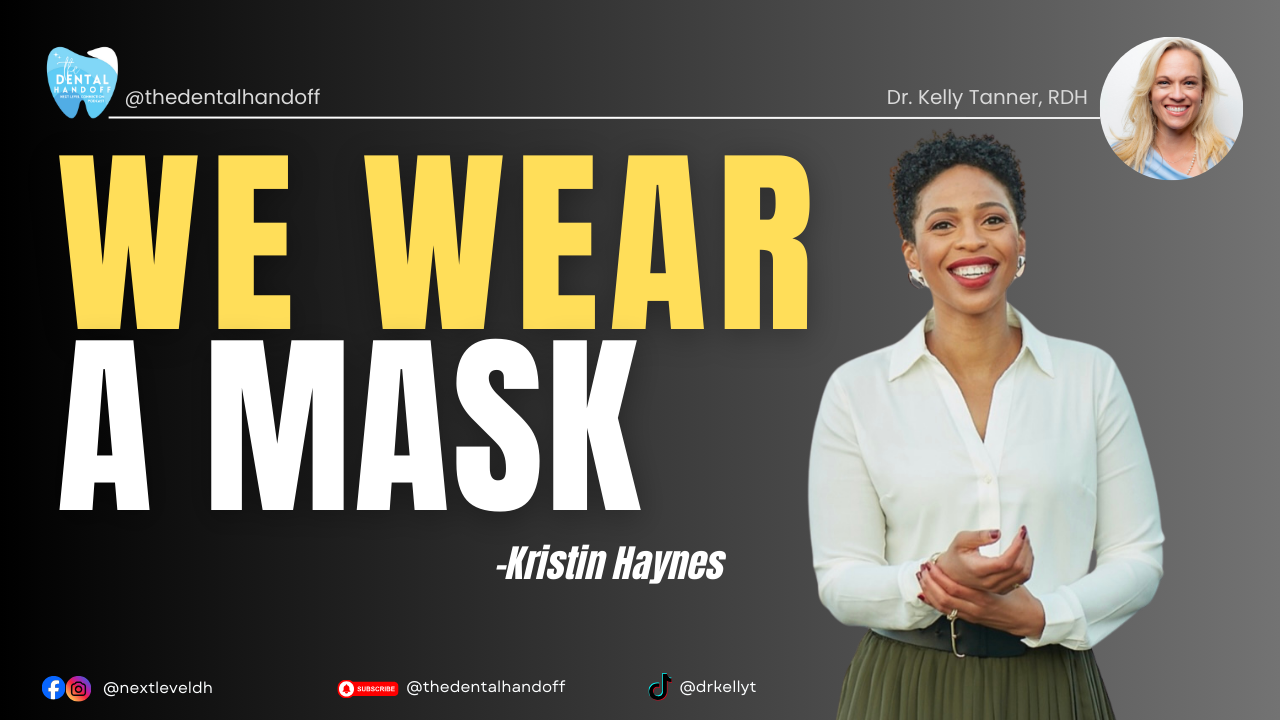
On a recent episode of The Dental Handoff, I had the absolute pleasure of sitting down with fellow Virginian and practice management consultant, Kristin Haynes, founder of KH Productivity Management. Her story and her perspective beautifully capture something our profession is craving right now: human-centered leadership.
Kristin’s journey into dentistry wasn’t linear. In fact, like most meaningful careers, it zigzagged. And those zigzags are exactly what make her insights so powerful.
From The Front Desk To Practice Management: A Career Built On Curiosity
Kristin entered dentistry more than 25 years ago as a high school senior seeking a part-time job. What began at the front desk of a small orthodontic practice quickly became a lifelong calling.
She fell in love not only with dentistry’s ability to transform smiles—but with its ability to transform lives.
From hands-on clinical work to managing complex orthodontic cases, from boutique practices to high-volume multi-chair offices, Kristin experienced dentistry from nearly every angle. Along the way, she discovered something essential:
Great Dentistry Requires Great Systems, But Even Better Communication
Her career evolved into treatment coordination, KPI tracking, insurance navigation, and strategic planning. But the real turning point came when she partnered closely with a doctor who showed her something many of us forget: Doctors are human, too.
The Emotional Weight Of Dentistry (That No One Talks About)
Dentistry asks a lot of us physically, mentally, and emotionally. Kristin saw firsthand how much doctors carry:
Making payroll
Managing debt
Leading teams
Navigating conflict
Keeping the doors open during crises like COVID
Yet many doctors feel isolated in those responsibilities.
At the same time, team members often feel disconnected from the why behind decisions. That disconnect is where culture breaks down. Kristin’s work bridges that gap. She helps doctors understand their teams—and helps teams understand their doctors—by focusing on empathy, accountability, and emotional intelligence.
Why Consultants Get A Bad Rap And How To Do It Right
Let’s be honest: many practices have been burned by consultants who bulldoze systems without understanding people.
Kristin and I discussed this openly. The truth is, consulting should be a partnership, not a power struggle. Doctors must vet consultants carefully, just as they would a key team member. Consultants must respect the practice's culture, values, and humanity.
The best consulting doesn’t shame. It doesn’t force. And it never strips people of dignity.
Vulnerability Is Not Weakness—It’s Leadership
One of the most powerful moments in our conversation was Kristin sharing a personal story of grief and stress early in her career. By being vulnerable with her doctor, she was met with grace—not judgment.
That vulnerability didn’t weaken her position. It strengthened trust. It elevated leadership. And it shaped the mentor relationship that still guides her today.
When leaders allow vulnerability, they create psychological safety. And psychological safety is the foundation of a strong practice culture.
The Power Of Questions Over Blame
One of Kristin’s greatest strengths as a consultant is her approach to difficult conversations.
Instead of pointing fingers, she asks questions:
Where do you see your accountability in this?
How might your behavior be impacting the team?
What outcome are you truly working toward?
By focusing on facts not emotions, she helps practices uncover blind spots while preserving dignity. Because here’s the truth: Sometimes the challenge is the leader. And growth begins with self-awareness.
Culture, Clarity, And Buy-In
Healthy practices don’t happen by accident. They require clarity.
Doctors must know:
Where they’re going (short-term and long-term)
What their vision is
How they want to serve their community
Team members must know:
What they contribute
Why their role matters
Whether the practice aligns with their values
When expectations are clear, buy-in follows. And when people are allowed to work in their strengths not micromanaged out of fear profit and purpose can coexist.
Necessary Endings And Respectful Leadership
One of the most honest moments of our conversation centered on this idea:
What is obtained by force must be maintained by force.
Whether it’s hiring, retention, or leadership, forcing alignment never works in the long term. Sometimes, the most respectful decision—for the individual and the practice—is a necessary ending. Handled with integrity, these moments protect culture rather than damage it.
Dentistry Needs More Humanity
At the heart of this conversation is a simple truth: We are all humans trying to exist, lead, heal, and grow—often while wearing masks of perfection. But dentistry doesn’t need more perfection. It needs more empathy. More dignity. More grace. When doctors and teams see each other clearly—as people, not roles—everything changes. And that’s how we strengthen dentistry.
Want to Learn More?
Kristin Haynes is the founder of KH Productivity Management, where she helps dental practices grow through strategic systems and human-centered leadership.
If this conversation resonated with you, I encourage you to reflect on one question today:
How can I lead—with dignity—starting with myself?
Watch the full episode: https://youtu.be/cn3JeurRTpE
Keywords: dental hygiene, dental hygiene education ,aging population oral health, dementia and oral health, Alzheimer’s disease and dentistry, geriatric dental care, empathy in dentistry, patient-centered dental care, dental hygiene advocacy, dental hygiene continuing education, oral-systemic health, vulnerability in healthcare, dental practice culture, communication in dentistry, preventative dental care, dental hygienist autonomy, human-centered dentistry