Holding Space in Dentistry: Aging, Dementia, and the Power of Human-Centered Care
Dentistry has a way of reminding us sometimes gently, sometimes forcefully that no two days are ever the same. We can walk into the office with a perfectly planned schedule, only to discover that the most important task of the day has nothing to do with a procedure code.
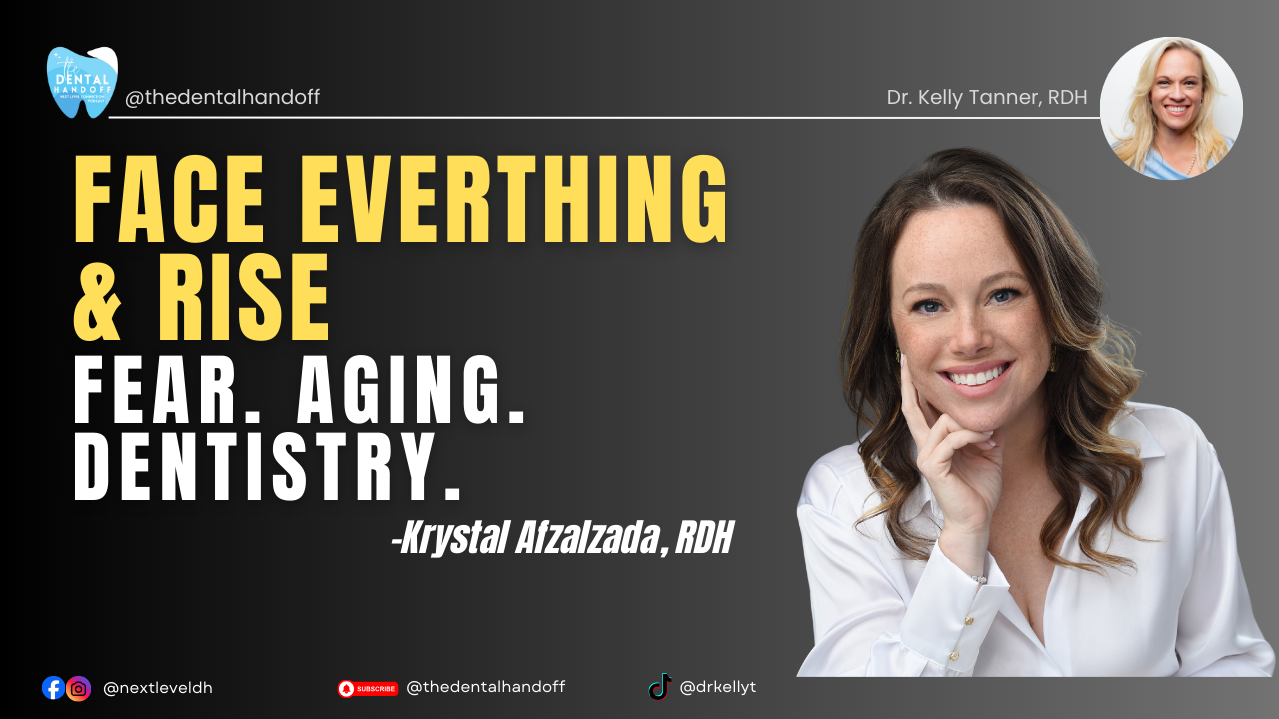
On a recent episode of The Dental Handoff, I had the pleasure of speaking with Krystal Afzalzada, RDH, a Canadian dental hygienist, educator, and continuing education provider who is doing deeply meaningful work in aging populations, dementia patients, and the oral-systemic health link. What unfolded was a conversation about fear, advocacy, vulnerability, and what it truly means to hold space for our patients, especially those navigating cognitive decline.
Sometimes Your Career Chooses You
Krystal’s journey into dental hygiene didn’t begin with hygiene school. It began in dental assisting working both chairside and at the front desk. Like many of us, she discovered hygiene through observation and curiosity. She said something that stopped me in my tracks: “We don’t imagine paths we aren’t capable of walking. ”If a thought keeps returning, I could do that—there’s usually a reason. Krystal listened to that voice, returned to school, and eventually found herself not only practicing clinically but also teaching future hygienists and educating healthcare providers across Canada.
Fear Isn’t the Enemy—It’s The Crossroads
Fear shows up everywhere in dentistry:
In hygiene school
In new roles
In leadership
In patient conversations
Krystal shared how she teaches her students to reframe fear, not as a stop sign, but as a choice:
Fear Everything and Run, or:
Face Everything and Rise
As educators and clinicians, our role isn’t to remove fear but to help others move through it with support, compassion, and confidence
Why Education Must Lead With Empathy
Krystal now teaches at two community colleges in the Greater Toronto Area, and one thing is clear: she remembers what it felt like to be a student who was afraid to ask for help.
Many of us were trained in environments where vulnerability felt unsafe, where struggling meant failure instead of growth. Krystal made a promise to herself to be a different kind of educator: one who leads with empathy, availability, and active listening.
And that same philosophy extends into her continuing education work.
Dementia, Oral Health, And The Stories We Don’t Hear
Krystal’s passion for aging populations and dementia care comes from lived experience. Her father was diagnosed with Alzheimer’s disease in 2016 and passed away in 2022.Through that journey, she saw firsthand how much miscommunication, misunderstanding, and lack of training exists even within dentistry, when it comes to supporting patients and families affected by dementia.
We often ask:
Do you brush?
Do you floss?
Are you compliant?
But we don’t always ask:
What are you carrying?
What changed for you recently?
What feels hard right now?
Patients navigating dementia either personally or as caregivers often don’t say what they’re experiencing. And sometimes, the quietest moments are the loudest.
Holding Space Is Clinical Care
Dentistry is fast-paced. Appointment times are shrinking. Production pressures are real. And yet, sometimes the most impactful thing we can do is pause.
Sit knee-to-knee. Put the checklist down. Listen.
For some patients, especially seniors or caregivers, you may be the only person who truly listens to them that week.
Holding space doesn’t always require more time. It requires presence.
“The Doctor Will Be Mad” Or Will They?
One of the most common concerns hygienists voice is fear of slowing down:
What if I don’t finish the appointment?
What if I don’t bill the code?
What if the doctor gets upset?
Often, these fears are assumptions not realities.
What truly impacts a practice over the long term isn’t a missed procedure; it’s a patient who doesn’t return because they didn’t feel seen, heard, or respected.
Culture matters.
Communication matters.
And advocacy matters.
A Canadian Perspective On Collaboration
Krystal shared valuable insight into how dental hygiene practice in Canada has evolved. Hygienists there now have greater clinical autonomy and greater collaboration with dentists, particularly in preventive care.
That collaboration creates space for honest conversations about time, patient needs, and ethical responsibility.
While practice models differ globally, the message is universal: Advocacy begins with communication.
Doctors aren’t mind readers. Teams must speak up for what patients and providers need.
Education Beyond The Dental Office
Krystal provides continuing education in multiple formats:
Live webinars
Community-based education
Hospital and long-term care training
Collaborations with Alzheimer’s organizations and behavioral support services
Her work focuses on:
Increasing dignity in care
Improving communication
Setting realistic expectations for oral hygiene
Supporting non-dental healthcare providers
Because oral health doesn’t exist in isolation it exists within systems, families, and real lives.
The Future Of Dentistry Is Advocacy
Patients trust us. They assume we’re doing the right thing. So, we must ask ourselves:
Are we advocating for what’s clinically and ethically right?
Are we holding space for humanity?
Are we willing to slow down when it matters most?
Dentistry isn’t just about what we do; it’s about how we show up.
And when we choose empathy, presence, and advocacy, we change lives.
Watch the full episode: https://youtu.be/hufLxKEEl-s
Keywords: dental hygiene, dental hygiene education ,aging population oral health, dementia and oral health, Alzheimer’s disease and dentistry, geriatric dental care, empathy in dentistry, patient-centered dental care, dental hygiene advocacy, dental hygiene continuing education, oral-systemic health, vulnerability in healthcare, dental practice culture, communication in dentistry, preventative dental care, dental hygienist autonomy, human-centered dentistry