The Dental Handoff: How Strong Team Communication Builds Trust, Case Acceptance, and Better Patient Care
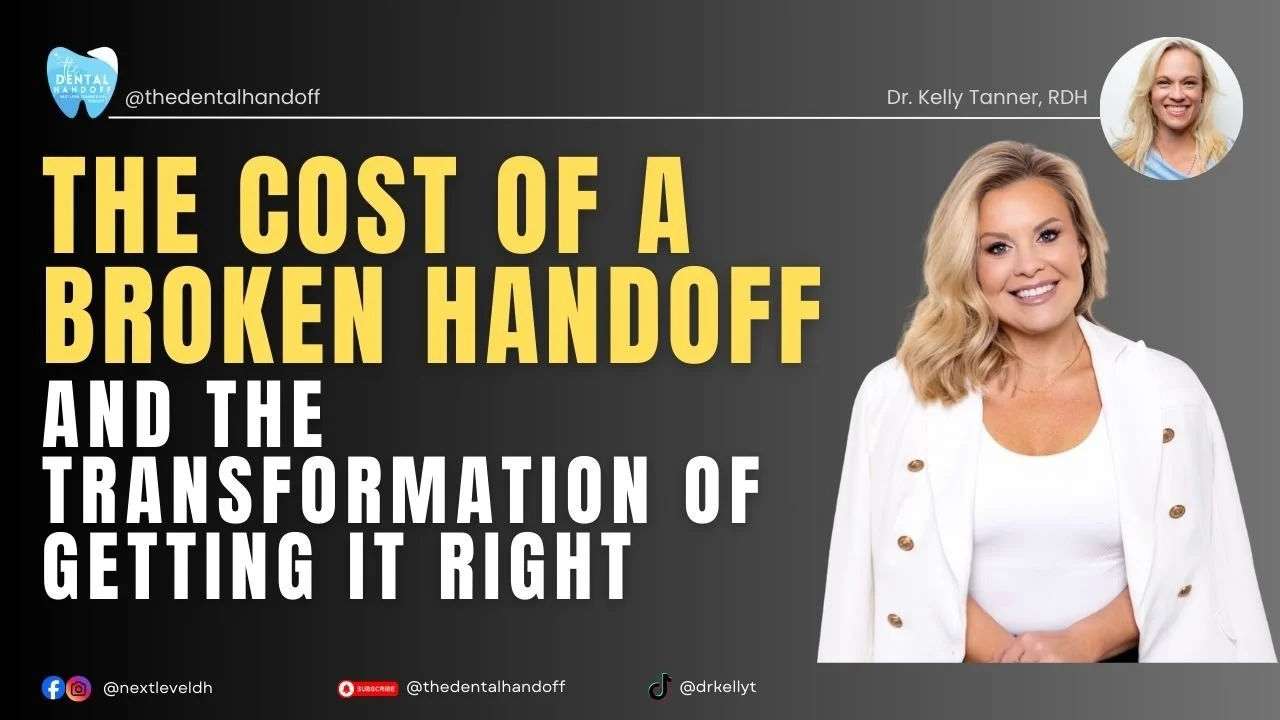
If there’s one thing I know for sure after years in dentistry, it’s this: the dental handoff is the heartbeat of the practice.
It’s not just a transition.
It’s not just communication.
And it’s definitely not “someone else’s job.”
The dental handoff is where trust is transferred, value is reinforced, and patients decide—often subconsciously—whether to trust your recommendations.
In a recent episode of The Dental Handoff Podcast, I sat down with Tia Sharee Meyer to discuss what makes a handoff successful, why so many practices struggle with it, and how small changes can lead to significant gains in patient experience, team alignment, and case acceptance.
Let’s break it down.
What Is A Dental Handoff—Really?
At its core, a dental handoff is the intentional transfer of trust, information, and confidence from one team member to the next in front of the patient.
Think about a relay race. You can have the fastest runners in the world, but if you drop the baton, you lose. Dentistry works the same way.
A strong handoff ensures:
The patient doesn’t have to repeat their story
Every team member appears aligned and confident
The patient feels seen, heard, and prioritized
Treatment recommendations feel consistent, not confusing
And patients notice when it’s done well.
Why The Dental Handoff Is A Patient Experience Issue
Patients don’t walk into your practice thinking about dentistry the way you do. They’re thinking about:
Time off work
Kids, schedules, and responsibilities
Anxiety, cost, and fear
Whether this visit is “really necessary.”
The moment they walk through your door, value has already been created—or lost.
A seamless handoff reassures them:
“We know who you are. We talk to each other. And your care matters here.”
When handoffs are weak or nonexistent, patients feel like just another body in the chair. When handoffs are strong, patients feel like VIPs.
The Circle of Care: Why Everyone Owns the Handoff
One of the most powerful concepts Tia shared is thinking of the patient journey as a circle of care not a straight line.
The handoff starts:
Before the patient arrives (scheduling, referrals, first impressions)
Continues at the front desk
Flows into the operatory
Moves through hygiene, assistants, doctors, and treatment coordinators
Extends beyond the visit with follow-up and outreach
Every role matters. Every note matters. Every word matters.
A breakdown at any point in the circle weakens trust and impacts case acceptance.
What a Strong Clinical Handoff Sounds Like
A successful handoff is verbal, confident, and patient-facing.
Example during a hygiene check:
“Doctor, I have Kelly here today. We took four bitewings, and she’s doing a great job with her home care. I’m concerned about the upper right—we captured an intraoral image, and this area looks suspicious. I’d love your input.”
What this does:
Reinforces positive behavior
Signals urgency without fear
Shows alignment between the hygienist and the doctor
Builds credibility in front of the patient
Silence during a doctor's exam? That’s not a handoff—that’s a missed opportunity.
Preheating Treatment: The Key To Case Acceptance
Here’s the truth: treatment coordinators should not be starting from scratch.
If the hygienist, assistant, and doctor haven’t already:
Educated the patient
Explained the “why”
Communicated urgency
Expressed confidence
…then the handoff to the treatment coordinator will fail.
When done correctly, patients walk into financial conversations already believing:
This matters
This is necessary
This should happen sooner rather than later
That’s not pressure, that’s advocacy.
The Role Of Conviction And Calibration
One of the fastest ways to break a handoff?
Lack of calibration.
If a hygienist confidently identifies a concern and the doctor dismisses it in front of the patient, trust collapses instantly. Strong handoffs require:
Team alignment
Shared philosophy of care
Mutual respect
Ongoing calibration conversations
Patients don’t need perfection—but they do need confidence.
Why Morning Huddles Matter More Than You Think
Great handoffs don’t start chairside they start in the morning huddle.
Morning huddles:
Identify patients with outstanding treatment
Prepare for anxiety, time constraints, or special needs
Create opportunities to save patient’s time
Reduce chaos and stress throughout the day
When the team knows the plan, the handoff feels effortless.
Training The Dental Handoff: Where Practices Go Wrong
Most teams aren’t bad at handoffs; they’re untrained.
We don’t learn handoffs in dental school. We learn them through:
Consistent team training
Role clarity
Repetition
Feedback
Intentional language practice
Training doesn’t mean criticism. It means asking:
“What can we do better tomorrow than we did today?”
When teams believe in the why, handoffs become natural.
The Big Takeaway
You don’t need another shiny piece of technology to grow your practice.
You need:
Strong systems
Trained people
Intentional communication
Consistent dental handoffs
When the handoff is strong:
Patients feel cared for
Teams feel aligned
Case acceptance improves
Schedules stay full
Trust becomes your greatest asset
And that’s where real growth happens.
Watch the full episode here: https://youtu.be/PCRpsDNP2BI
Keywords: dental handoff, dental handoff process, dental team communication, patient trust in dentistry, case acceptance dentistry, dental case acceptance strategies, dental practice systems, dental morning huddle, hygiene to doctor handoff, treatment coordinator handoff, dental team training, patient experience in dentistry, oral health communication, dental workflow optimization, building trust with dental patients, dental leadership communication, handoff in dental practices, clinical handoff dentistry