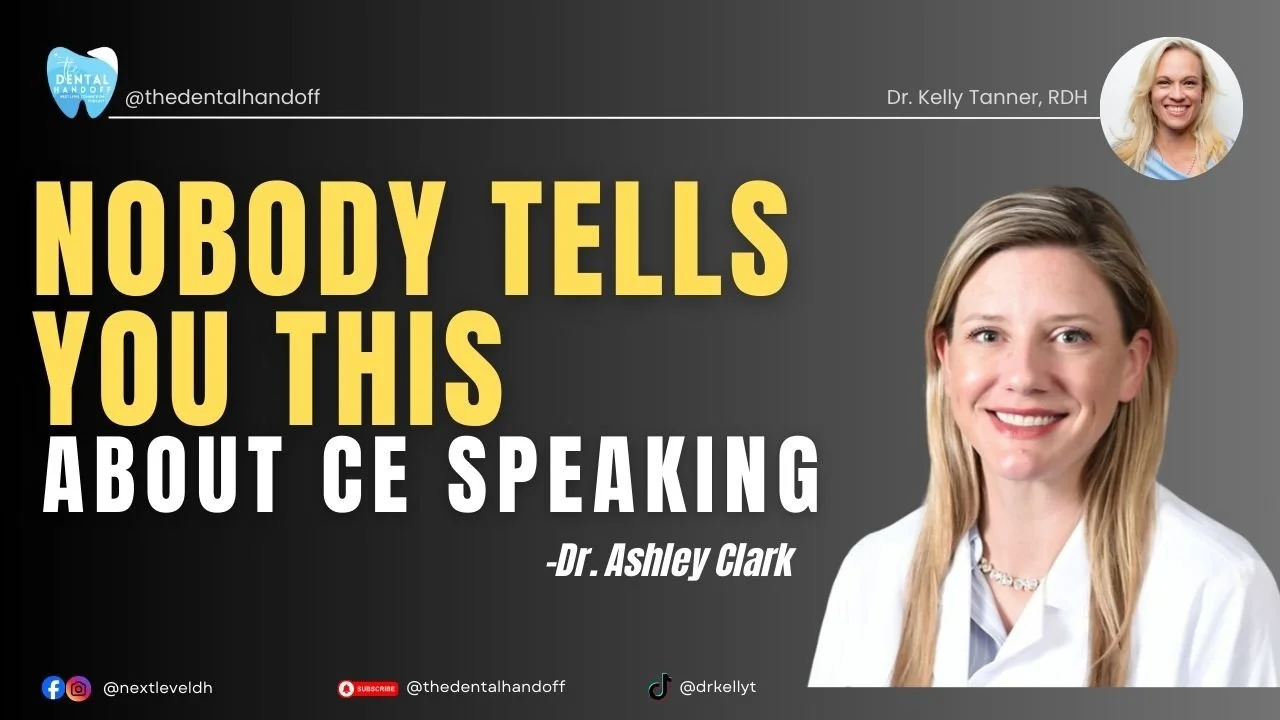
One of my favorite things about hosting The Dental Handoff is getting to sit down with people who are not only brilliant in their field, but also deeply human. This episode was exactly that.
I had the absolute joy of welcoming back c, oral pathologist, educator, and what I lovingly call an edutainer. If you’ve ever seen Ashley lecture, you know what I mean: sharp clinical insight, bad-slash-good jokes, and an uncanny ability to make complex oral pathology both approachable and memorable.
In this conversation, we covered everything from the evolution of oral pathology and digital diagnostics to what no one tells you about life as a dental speaker, including shoes, imposter syndrome, and learning how to own your expertise.
Is Oral Pathology Changing? Yes And No
One of the first questions I asked Ashley was whether oral pathology itself is changing. Her answer was refreshingly honest.
While there aren’t a flood of new disease entities, the way we diagnose and interpret pathology is evolving quickly. Advances in genetics, immunohistochemical staining, and digital slide scanning are reshaping how pathologists work.
More practices are now:
Using digitized pathology slides
Implementing computer-assisted analysis for brush biopsies
Incorporating AI-supported diagnostics
Ashley shared that some private practices now scan slides and allow pathologists to read cases remotely. While she personally still prefers the tactile, traditional microscope approach, she recognizes that virtual pathology is becoming the standard, especially for newer generations entering the field.
The key takeaway?
You don’t have to abandon fundamentals—but you do have to adapt.
Why Continuing Education Matters In Oral Pathology
Ashley highlighted how critical it is for clinicians and pathologists to stay current. New stains like SOX10 and PRAME which are increasingly important for diagnosing neural tumors and melanoma weren’t even on the radar a decade ago.
While H&E staining is foundational, relying solely on it can lead to missed diagnoses if it’s not paired with modern adjuncts.
In oral pathology, staying current isn’t optional; it’s a patient safety issue.
The Reality Of Life As A Dental Speaker
Here’s the part of the conversation we don’t talk about enough in dentistry: what it actually takes to be a professional speaker.
Ashley and I unpacked the behind-the-scenes reality:
Eight-hour lecture days
Long travel schedules and flight delays
Carrying multiple slide advancers, batteries, thumb drives, and backup plans
And yes… bringing multiple pairs of shoes
Being a speaker isn’t just about knowing your content. It’s about preparation, adaptability, and respect for your audience.
One of my favorite moments was our discussion about footwear because if you lecture all day, you know this matters. Comfort, professionalism, and stamina are not superficial concerns; they directly affect your ability to deliver value.
From Academia To The CE Circuit
Ashley’s transition from academia to the national CE stage came with a steep learning curve. While her teaching experience gave her a huge advantage in content delivery, there were still things no one teaches you:
What a speaker packet is
How scouts find speakers
Why you need a website and professional branding
The difference between a CV and a speaker bio
How to evaluate sponsorships ethically
Her story is a powerful reminder that being an expert and running a speaking business are two different skill sets.
Owning Your Expertise Without Apology
One of the most meaningful parts of our conversation centered on imposter syndrome.
At some point, every speaker—and clinician—must decide:
Am I willing to stand firmly in what I know, even if it makes people uncomfortable?
When you’re teaching oral cancer, pathology, and diagnosis, clarity matters more than comfort. Ashley shared that she’s become more confident about being direct, firm, and unapologetic when patient lives are on the line.
That confidence doesn’t come from ego. It comes from responsibility.
Why Feedback Makes You Better
Ashley’s background in adult education included something many of us never do: watching recordings of herself teaching and analyzing them in detail.
How long do you wait after asking a question? How much are you talking versus engaging? What filler words do you use?
That kind of feedback can be uncomfortable—but it’s transformative. And it’s one of the reasons Ashley resonates so deeply with audiences today.
Dentistry Is Better When We Learn Together
One thing I’ll always believe: the audience teaches the speaker as much as the speaker teaches the audience. The best learning happens in conversation, in questions, in shared curiosity.
This episode reminded me why I love this work—why education, dentistry, and lifelong learning are so deeply connected.
And yes… we even managed to diagnose shoes along the way.
Watch the full episode: https://youtu.be/Y_cYq1eLyEo
Keywords: oral pathology, oral pathology education, oral cancer diagnosis, dental continuing education, dental speakers, dental lecture circuit, dental education podcast, The Dental Handoff podcast, Kelly Tanner, PhD, RDH, Dr. Ashley Clark, oral pathology, AI in oral pathology, digital pathology slides, brush biopsy dentistry, oral pathology stains, SOX10 stain, PRAME melanoma stain, oral cancer screening, imposter syndrome in dentistry, dental professional development, dental speaker tips, continuing education dentistry, oral pathology CE courses, dental education leadership